Workers Take Fight to BP Annual Shareholders Meeting
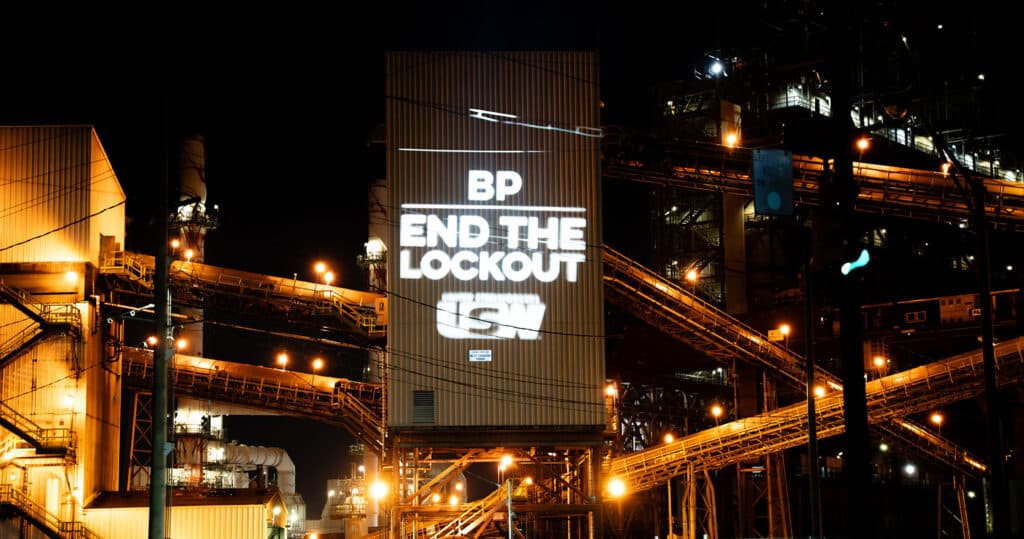
Members of USW Local 7-1 at the BP oil refinery in Whiting, Ind., took their fight for a fair contract across the Atlantic in April to confront BP’s management that locked them out of their jobs on March 19.
Members of Local 7-1, which represents nearly 1,000 workers at the refinery, traveled to London to attend BP’s annual shareholders’ meeting as part of their effort to bring attention to the lockout and to call for an end to the company’s unfair labor practices.
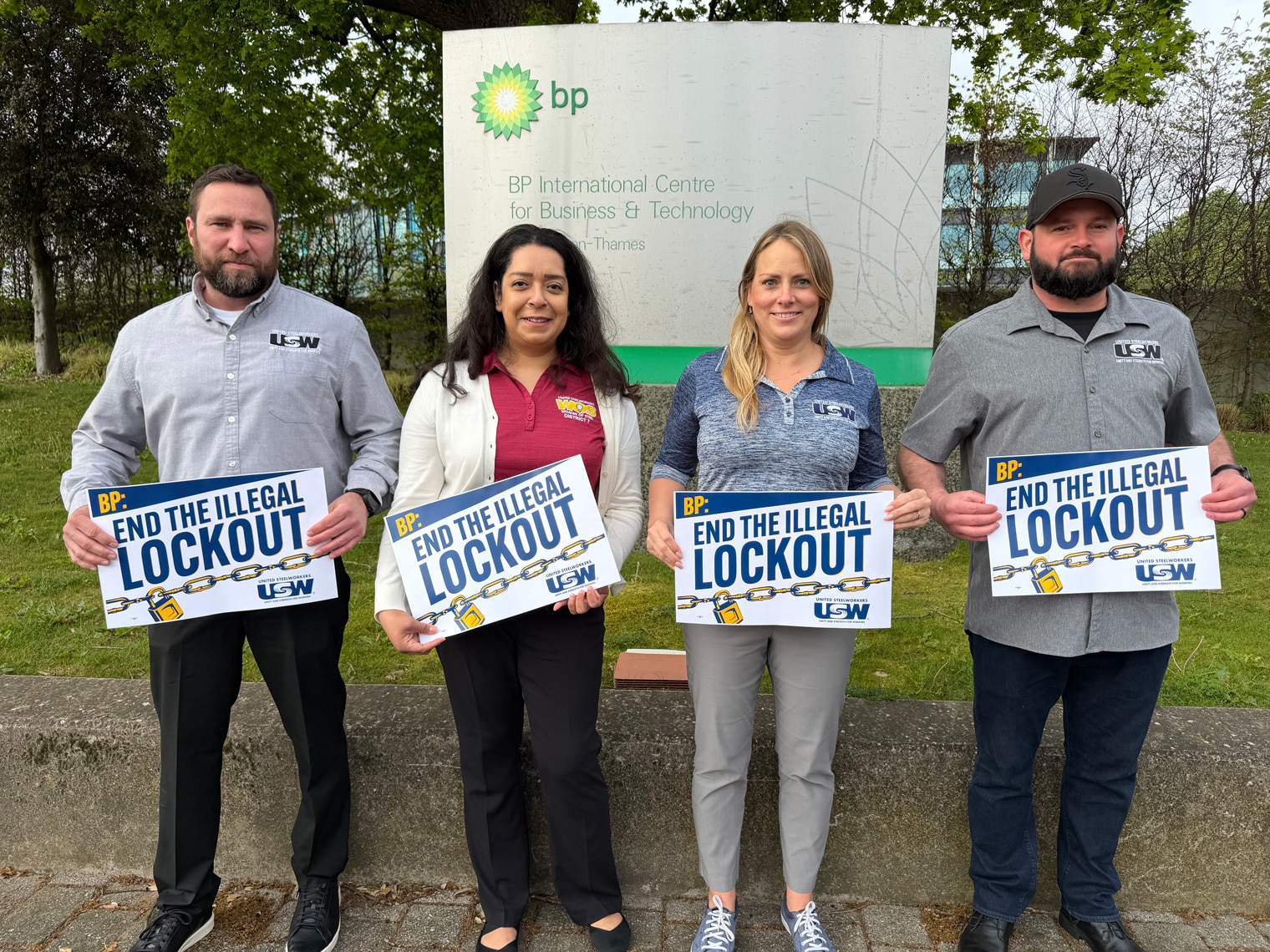
“We’ve spent most of our negotiations discussing BP’s concessionary proposals that would eliminate local jobs, freeze or reduce pay across the board and strip us of bargaining rights,” said Local 7-1 President Eric Schultz said. “We will continue to negotiate in good faith.”
During the BP annual shareholders’ meeting, which took place on April 23, USW members, who also own shares in the company, were subjected to extremely invasive searches by company security, and many were denied the right to enter or speak at the event after making good-faith efforts to prove their status as BP shareholders.
“BP’s treatment of its workers and shareholders is shameful,” said Mike Smith, chair of the union’s National Oil Bargaining Program. “The company clearly singled out USW members – who are shareholders – with this disgraceful behavior.”
Despite the unfair treatment members are facing from BP, Schultz said he was grateful for the support the workers in Indiana are receiving from across the United States and the rest of the world.
“There is clearly a war on workers right now, and there’s a reason for it,” Schultz said. “BP is taking these aggressive actions because of the political and social climate in this country right now, and we need to do everything we can to fight back. BP’s unconscionable lockout of refinery workers at a time that petroleum prices are at historically high levels is not in the best interests of the company, its shareholders, customers or employees.”
By clicking Sign Up you're confirming that you agree with our Terms and Conditions.
Want to Learn More?
See how the USW is making a real difference in our communities and our workplaces.