Building Power with Our Ballot: Seeking Historic Change in Arizona
This is part 5 of the Building Power with Our Ballot series from the USW’s Political newsletter Election Connection.
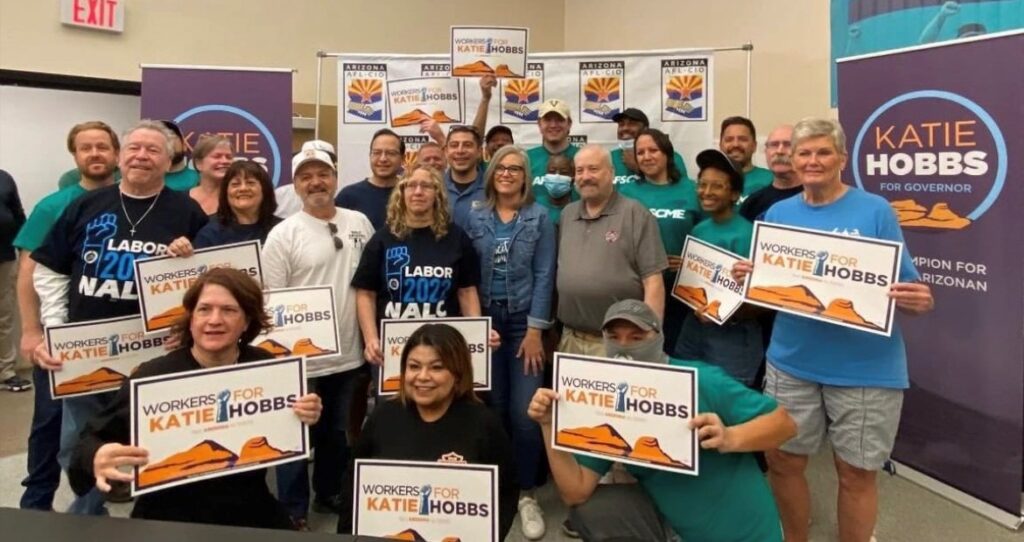
Arizona’s labor movement sees an opportunity for historic change in the state legislature that would bolster incumbent Gov. Katie Hobbs’ ability to pass new laws protecting workers.
Facing her own highly competitive reelection bid in 2026, Hobbs has seen much of her pro-working-families agenda stymied by a state legislature long dominated by anti-worker majorities.
However, for the first time in more than 60 years, we have an opportunity to secure pro-worker control of all three levels of Arizona state government.
“Gov. Hobbs’ solid support for Arizona’s working class is being thwarted by billionaire-funded politicians,” said USW District 12 Director Gaylan Prescott. “It’s high time that hard-working Arizonans take back the Grand Canyon State, re-elect Gov. Hobbs, and elect representatives who unequivocally pledge support for workers’ rights to justice and dignity from every employer operating in Arizona.”
In 1946, the Arizona state constitution was amended to include an anti-union “right to work” provision – commonly referred to as a “free rider” clause – which allows workers who enjoy the benefits of a union contract to opt out of paying union dues.
As a result, Arizona’s unions have essentially had to fight with one hand tied behind their back when working to protect workers from everyday problems like heat exposure.
In 2024, the USW and the entire Arizona labor movement rejoiced when the Biden administration established the first-ever federal heat standard to protect workers exposed to deadly temperatures on the job.
Unfortunately, this provision is one of many that have been delayed by the current administration following President Trump’s “Unleashing Prosperity Through Deregulation” Executive Order (EO), which required federal agencies to “identify at least 10 existing regulations to be repealed” for each one they create.
Knowing Trump’s EO would put the Biden heat standard in jeopardy, Gov. Hobbs acted quickly to convene a Workplace Heat Safety Task Force (WHSTF) led by industry leaders, labor, and occupational safety and health experts who would be responsible for drafting and recommending a similar, state-level rule to protect Arizona’s workers.
In December 2025, the WHSTF issued a list of recommendations that are now being implemented by the Arizona Division of Occupational Safety and Health.
However, enforcement is key, and the legislature decides whether the state budget includes funding for additional inspectors that could hold employers accountable for keeping workers safe on the job.
This is just one of many examples of why local and state elections deserve union voters’ attention.
Ballot Measures and Worker Power
While electing lawmakers who share our union values is important, ballot initiatives and referendums can also impact worker bargaining power.
While they are not an option in all states, ballot initiatives and referendums allow citizens to vote directly on statutes and constitutional amendments rather than having state lawmakers decide the outcome.
Under the initiative process, voters would be deciding to either pass or prevent a statute or constitutional amendment from being enacted. Referendums, on the other hand, allow voters to approve or repeal a bill that has already been enacted by the legislature.
This year, in Vermont, voters will weigh in on Proposal 3. If adopted, Proposal 3 would amend the state constitution to include language protecting all workers’ rights to join a union and collectively bargain, safeguarding them from future state-level legislative attacks.
In 2022, the USW joined a chorus of workplace advocates in celebrating voters’ overwhelming approval of a similar initiative, the Illinois Workers’ Rights Amendment, which added language to the state constitution affirming that all workers in Illinois “shall have the fundamental right to organize and to bargain collectively through representatives of their own choosing for the purpose of negotiating wages, hours and working conditions, and to protect their economic welfare and safety at work.”
You can find more information on ballot initiatives and referendums by clicking HERE.
By clicking Sign Up you're confirming that you agree with our Terms and Conditions.
Want to Learn More?
See how the USW is making a real difference in our communities and our workplaces.