Millsap: Congress Must Support Steel Industry
Leaders in Washington, D.C., must work with USW members and their employers to revitalize the American steel industry by modernizing trade laws, securing federal investments in domestic manufacturing, and protecting workers’ rights to unionize.
That was the core message that District 7 Director Mike Millsap delivered on Jan. 14 when he testified before the Congressional Steel Caucus, calling on lawmakers to support American manufacturers.
“We want to work with this caucus on balancing the scales to make it easier for Steelworkers to fight for their jobs, invest in our communities, and create the next generation of high-paying manufacturing jobs,” said Millsap, who spoke to the group along with a handful of other steel industry representatives.
A second-generation Steelworker who has led District 7 since 2014, Millsap represented the USW at the hearing, entitled “State of the Steel Industry.”
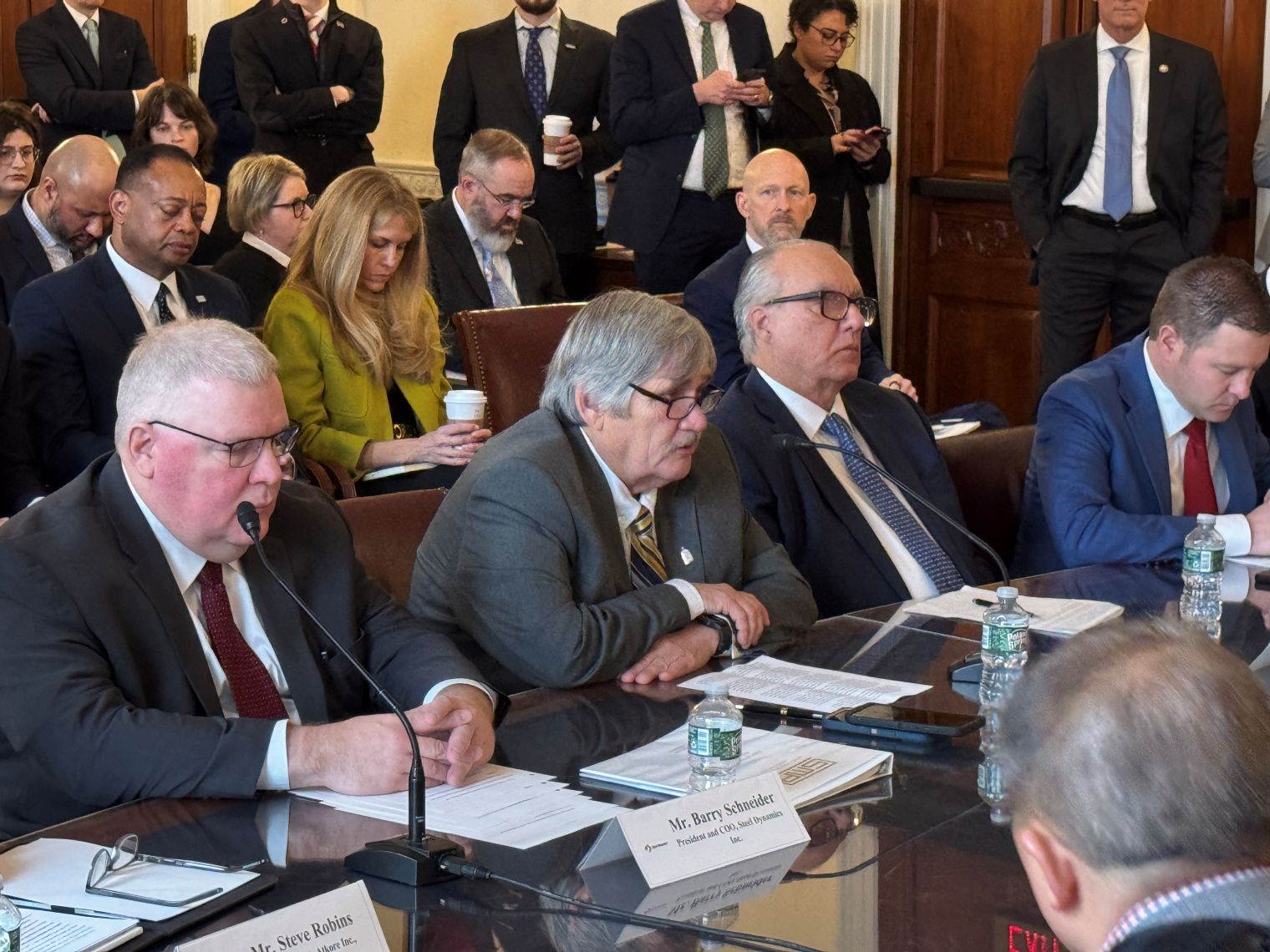
Millsap noted that he has played a key role in negotiations with major steel producers like U.S. Steel and Cleveland Cliffs, two companies whose labor agreements with USW members expire this summer.
“We will negotiate agreements that will employ tens of thousands, and pump billions of dollars into local economies across the country,” said Millsap, who noted that more than 1,000 new members who work in the steel industry have joined the USW in the past year. “These workers are independents, Republicans, and Democrats, and they are ready to work together to make their workplaces safer, to have a voice on the job, and to make the steel our country needs to drive the future.”
The steel caucus is a bipartisan group of more than 100 federal lawmakers who represent regions with connections to the steel industry. U.S. Rep. Rick Crawford of Arkansas chairs the group, while Rep. Frank Mrvan of Indiana serves as vice chair.
Millsap called on the members of the caucus to address the problems that have plagued steelmakers in recent years, including global overcapacity and unfair trade practices such as illegal dumping, subsidization and currency manipulation, particularly from China.
“Congress has a role to play here by updating our trade laws and ignoring all the tariff rhetoric,” Millsap said. “We need to improve our trade agreements to have strong rule of origin policies in steel.”
Congress can also strengthen U.S. manufacturing through policies like Buy America and legislation like the Ships for America Act, which would help to ensure that the demand for steel remains strong domestically, he said.
“We cannot let our market be the dumping ground of other countries’ steel in an effort to keep their unemployment rate low,” Millsap said. “We will defend the American steel industry from anyone who seeks to close our plants and make our country less secure.”
For the full text of Millsap’s testimony, click here.
By clicking Sign Up you're confirming that you agree with our Terms and Conditions.
Want to Learn More?
See how the USW is making a real difference in our communities and our workplaces.