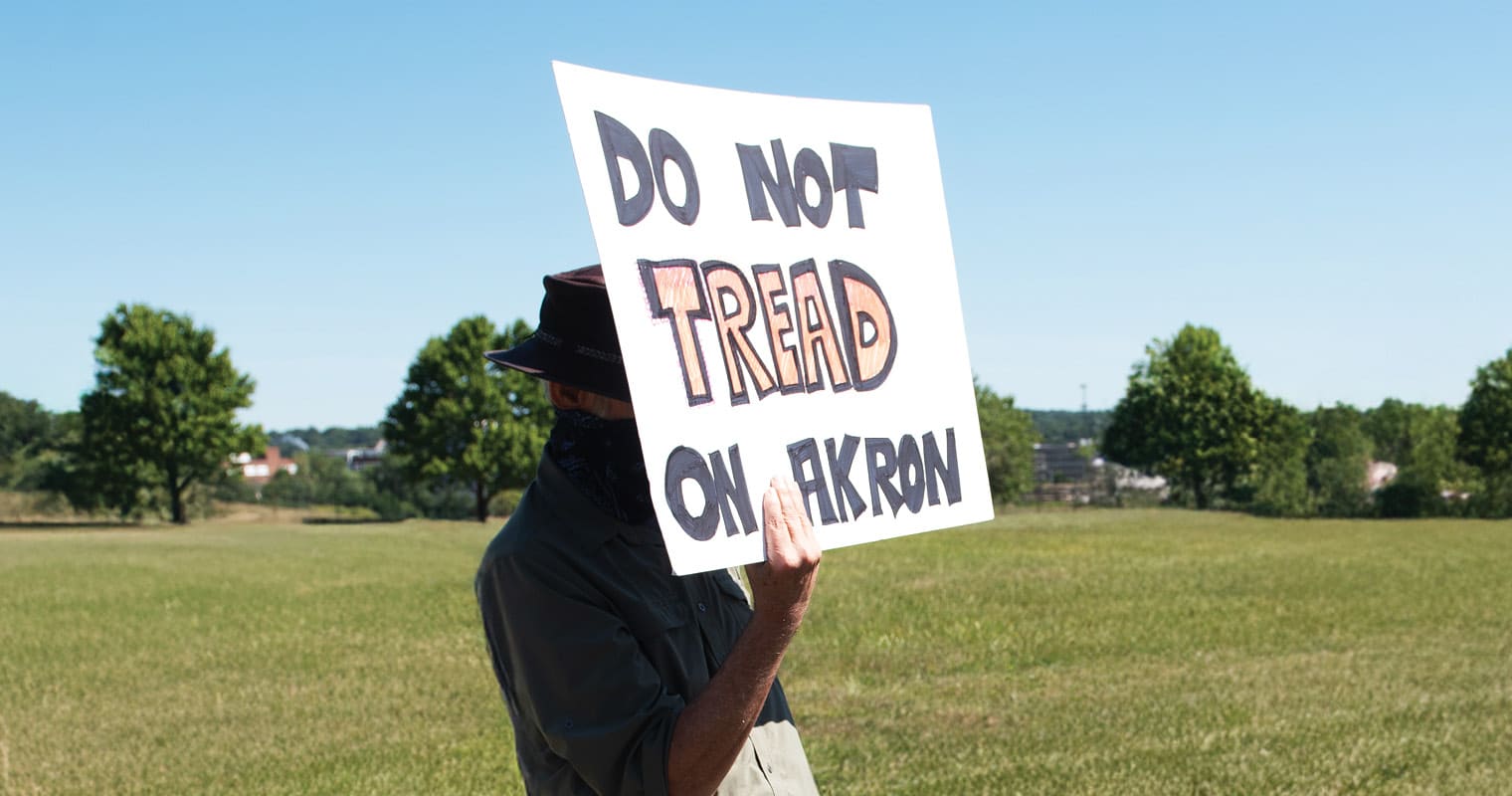
Stronger Together at Goodyear
We’re stronger when we stand together, which is why we negotiate alongside the other USW locals at Goodyear.
Local 2L – Akron, Ohio
Local 307L – Topeka, Kan.
Local 831L – Danville, Va
Local 959L – Fayetteville, N.C.
Stronger Together at Goodyear
Our master agreement covers major issues impacting all sites:
- Wages and COLA
- Vacation
- Healthcare, dental and vision plans
- Retirement
- Health and safety
- Accident and sickness
- New hire progression
In our last master agreement, we built on the foundation set by decades of successful bargaining and secured one of the best contracts in recent history. Together, we:
- Eliminated the last of the two-tier wage system
- Secured wage improvements and maintained COLA
- Improved vacation accrual for both new hires and the most senior
- Improved retirement options
- Improved safety language and safety shoe allowance.
Proud History
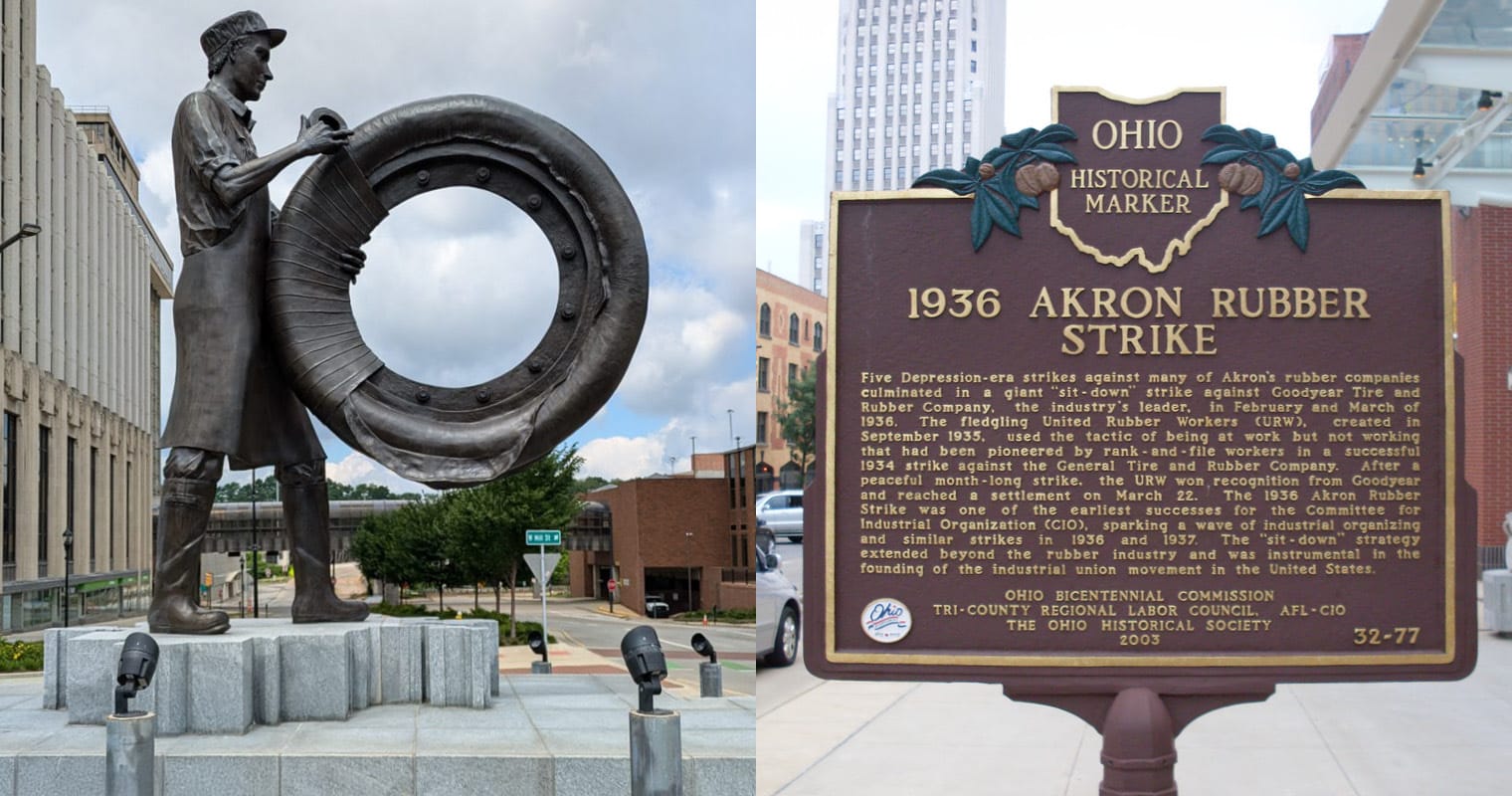
Rubber Workers led the way in union organizing in the nation in the 1930s with the first successful sit-down strike at Goodyear in Akron, Ohio in 1936. The company attempted to violently disperse the strikers, enlisting local police to attack picket lines. But Rubber Workers stood their ground, paving the way for a brighter future for all working people.
Over the years, we’ve made sacrifices to keep our companies afloat during hard times while always standing up for fair pay and safer workplaces.
Key Moments in Rubber Worker History
1935 – United Rubber Workers established to fight back against dangerous working conditions, low wages and a lack of benefits.
1936 – Workers at Goodyear in Akron, Ohio initiate a sit-down strike in response to company efforts to lower wages, increase work hours and lay-off people arbitrarily. Rubber Workers roll back the increased hours and secure seniority rights in the event of layoffs.
1937 – Following an eight-week strike, Firestone signs the first union contract for a major tire company.
1940 – Union wins vacation days for the first time in the face of strong opposition from tire companies.
1941 – Union achieves solid wage increase as Goodyear becomes the last of the major tire companies to sign a union contract.
1953 – Medical benefits created, including surgical and hospital care.
1956 – Union obtains Supplemental Unemployment Benefit (SUB) to provide economic support for members who are laid off.
1976 -Historic settlement with the Big 4 tire companies provides major wage boost and COLA to keep pace with rising prices tracked by the Consumer Price Index.
1987 – Union health and safety work expands as OSHA establishes Benzene standard. Union launches campaigns to challenge plant closings and outsourcing of jobs and steps up organizing campaigns at non-union plants.
1994 – Strike at Bridgestone Firestone challenges company efforts to gut the union contract.
1995 – United Rubber Workers merge with the United Steelworkers.
1996 – Strike settled at Bridgestone Firestone with wage hikes, restoration of paid holidays and three more plants brought into line with the Master.
2006 – Goodyear locals strike for 12 weeks. Settlement includes creation of a fund for retiree medical benefits, $550 million invested in USW-represented plants and application of COLA to hourly pay rates.
2022 – Successful negotiations improved wages, eliminated two-tier system and secured COLA and benefits.