USW Making Rail Operations Safer to Prevent Future Tragedies
USW members launched an effort in 2024 to make in-plant and in-mill railroad operations safer and to prevent future tragedies with this small job classification.
At least 89 Steelworkers have lost their lives in rail-related tragedies since 1980. All of those losses were preventable. Because federal workplace regulatory agencies do not provide comprehensive in-plant rail regulations, and some USW workplaces have up to 100 miles of railroad tracks, USW members recognized that more needed to be done.
Some of the most common fatal hazards include workers getting caught between equipment and close clearances; derailing rail cars; workers thrown or falling; workers struck by equipment or falling doors; toxic or hazardous substances; molten metal explosions, and work organization factors such as ‘green-on-green’ training.
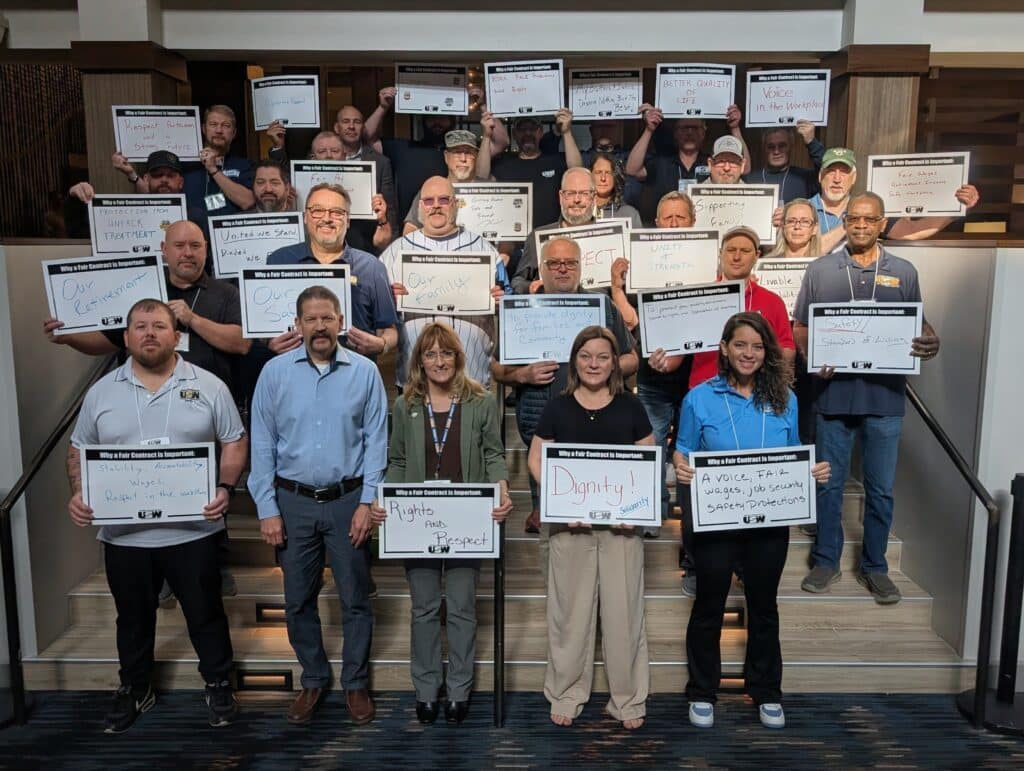
The resulting collaboration, coordinated by the USW’s Health, Safety and Environment department, included rank-and-file workers, health and safety advocates, and members of management, with assistance from George Gavalla of Triad Railroad Consulting.
Together, their aim was to eliminate hazards related to in-plant and in-mill rail operations by applying the hierarchy of controls. Workers came together to share their experiences and knowledge to prevent future tragedies. The result was a 76-page guide dedicated to all workers who have lost their lives in rail tragedies.
By clicking Sign Up you're confirming that you agree with our Terms and Conditions.
Want to Learn More?
See how the USW is making a real difference in our communities and our workplaces.